Justice for Jaws: Why Sharks Deserve Better PR
Dive into the truth behind myths, discover why sharks deserve our protection, and join the fight for justice for the ocean’s most misunderstood predator.
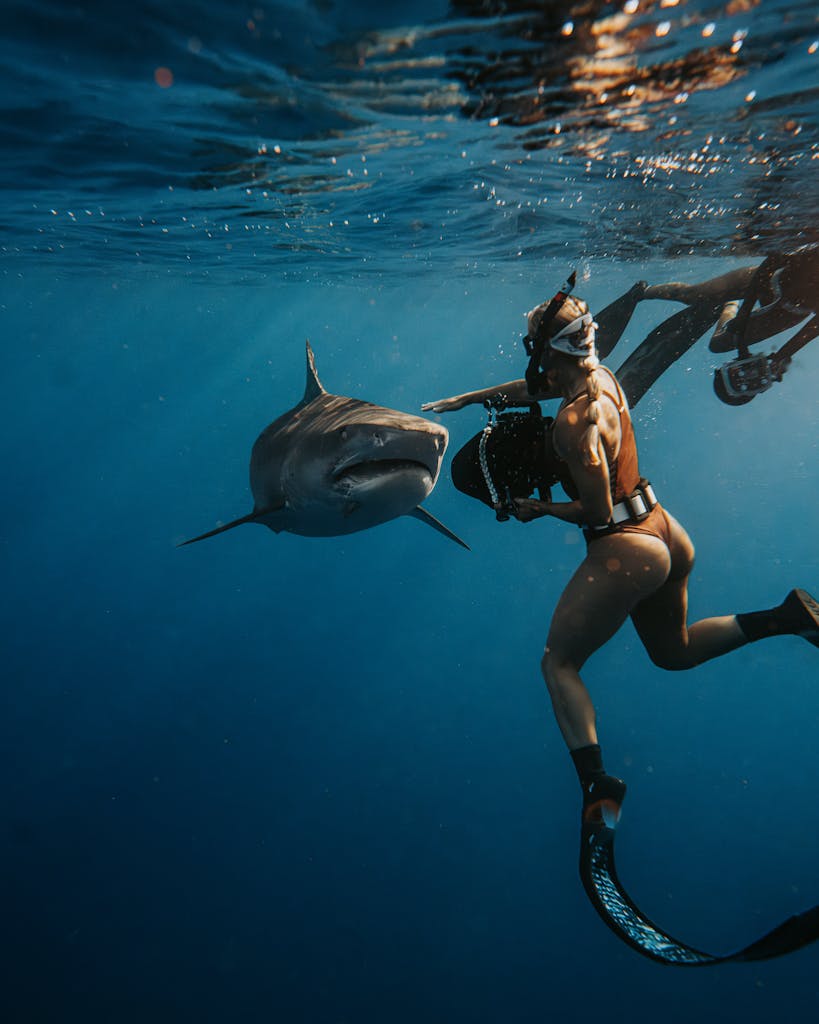
Let’s get one thing straight: sharks are not the ruthless oceanic hitmen the media makes them out to be. The popular ‘bloodthirsty predatory stalking holiday swimmers’ narrative? Absolute bollocks.
Sure, everyone’s entitled to their own opinion. But if we’re going to demonise an entire species collectively, and in some cases, justify mass extermination, shouldn’t we base our beliefs on something a little more robust? Like, I don’t know… actual science?
The Truth behind the Teeth:
Here’s a bite of reality: shark attacks are rare. Fatal ones? Even rarer. You’re more likely to die from a cow (yes, a cow), a falling champagne cork, or even constipation.
- Only 25% of shark incidents since 1960 have resulted in fatalities.
- In 2024, there were 47 fatal shark attacks worldwide. Meanwhile, constipation kills around 900 people annually in the U.S alone. So maybe consider your fibre intake before you falsely critique sharks.
Seriously, ask any marine biologist, and we’ll happily provide you with a list of dumb ways to die; none of them mention the meg! You’re statistically more at risk of alcohol. But remember, no one’s calling for pub shutdowns on a Friday night, are they? The real threat is not the meg, but the bottle.
Yet sharks are still painted as public enemy number one in the news and film. It’s time we challenge these misconceptions. Why? Because fear sells. Drama gets clicks. And let’s be honest- sharks make for killer headlines. But it’s up to us to see beyond the sensationalism and understand the truth about these creatures.

Sharks are clickbait royalty. Nothing screams ‘viral content’ like a blood-splattered beach and a headline that reads:
“Shark tears into swimmer while horrified crowds watch”
“Man mauled by killer shark in freak attack”
The language used in these articles is wild. Sharks are portrayed as ‘bloodthirsty,’ ‘merciless,’ and ‘man-eating predators.’ You’d think these creatures were the heads of an underwater mafia- plotting coastal ambushes with pocketknives strapped to their fins.
As a result, sharks are facing a greater risk of extinction. Population declines are far more likely than the rare chance of us getting bitten, a fact that is often misrepresented in the media. It’s time we shift our focus to a more balanced representation. One that respects these creatures and their conservation status.
In reality, they’re just cruising through the oceans, minding their own business.
Now, before you all accuse me of downplaying real tragedies, every human injury or death is devastating. No question. But labelling every single shark bite an ‘attack’ is misleading, sensationalist and irresponsible. Instead, we should transition to terminology such as ‘human-shark interaction’, etc.
Marine scientists and conservationists have spent years begging for a shift in terminology. Not every human-shark interaction is a deliberate act of violence. Sometimes it’s curiosity. Sometimes it’s mistaken identity. And sometimes, it’s a self-defence reaction.
Jaws, Jump scares and Junk science:
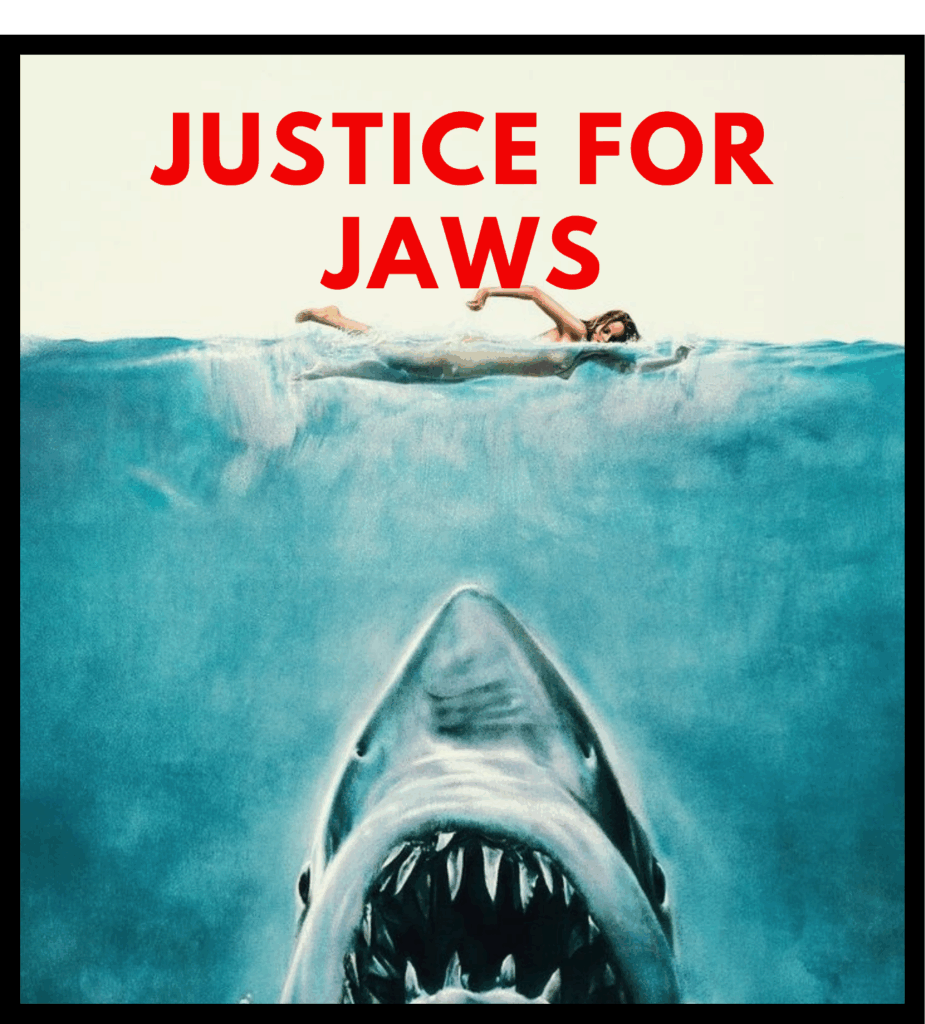
Hollywood isn’t helping either. Between Jaws, The Meg, 47 Meters Down, and the glorious train wreck that is Sharknado, sharks have been typecast as villains in some of the most profitable horror movies to date. Now compare that to educational shark documentaries, which reach a fraction of the audience. No wonder people are scared to put even a toe in the ocean. We’ve let fiction define our fears. The result? Public paranoia is used as a political justification for lethal shark mitigation techniques, including culling and drumline traps.
The Cost of Fear: Conservation gets Cockblocked:
Let’s get serious: this fearmongering isn’t just a PR problem. It’s a conservation crisis.
Research indicates that media-driven fear of sharks can decrease public support for shark conservation. After reading about shark “maulings,” people are less likely to back protection initiatives.
Politicians have even used media panic to justify lethal control measures, very sneaky if you ask me. Blaming your problems on a species that can’t bite back… This was found to have catastrophic effects on species. Case in point: in 2013-2014, the Western Australian government deployed drum lines to catch and kill sharks seen as a ‘threat to public safety’. No humans were harmed during those three months, but 172 sharks were caught, and 50 were shot dead.
So, who exactly are we protecting?
A Shift in Perspective: Sharks Aren’t Out to Get You
We need to reframe our perspective on sharks. Most bites aren’t attacks; they’re mistakes, cases of curiosity, or even self-defence.
The Karen Effect: How media dictates our rage:
Think about it. Have you ever found yourself irrationally furious at a Karen pushing her way to the front of the café queue, demanding a replacement of her ‘not-hot-enough’ black Americano while side-eyeing the tattooed barista with a nose ring? We all have. And the rage? It’s real. But it’s built upon stereotypes, fuelled by social media posts and memes. By the way- leave the barista alone, Karen. Her latte art is sensational, and it’s scientifically impossible to increase the temperature of boiling water.
The point? Our emotions are moulded by the narratives we are fed. Just like we can unfairly judge a barista for her ‘bold’ fashion statements and her ‘RBF’, we unfairly fear sharks based on constant misinformation.
Home invasion analogy: Sharks are curious, NOT cruel
Another way to look into it is this. If you saw someone coming into your home in a neon pair of budgie smugglers, splashing about, entirely out of place. You would be curious too, right? Maybe even a little disturbed?
Sharks display a similar curiosity. With their eight primary acute senses, including smell, pressure detection, and electromagnetic sensitivity, they explore unfamiliar things in their environment. When a flailing human enters their space, they’re not thinking, ‘Mmm… lunch.’ They are reacting to something abnormal in their world.
Not every nibble is an act of aggression. Labelling every incident an ‘attack’ is like calling every bee sting ‘a premeditated assault.’
Let’s Talk to Scientists, Not Just Screenwriters:
The biggest tragedy isn’t just the fear; it’s the fact that this fear distracts us from addressing real issues, such as overfishing, climate change, and ecosystem collapse.
So here’s a wild idea:
- Watch documentaries like Sharkwater, Blue Planet or Planet Ocean
- Go on a shark dive
- Or talk to a marine biologist (we’re a blast at parties)
Final Word: Let’s Rewrite the Narrative
Let’s do better.
Let’s ditch the drama, rethink the language, and give sharks the PR they deserve. If we spent a little more time talking to marine biologists, watching shark documentaries, or, better yet, diving with sharks, we’d see them for what they really are: beautiful creatures that play critical roles in shaping marine ecosystems.
Next time you see a shark movie, remember: The CGI isn’t the only fiction on the screen…
Have any questions about sharks or want to share your own experiences with these misunderstood creatures? Drop a comment below, or reach out to me on Instagram or via email. I’d love to hear from fellow ocean enthusiasts. And if you’re ready for more shark stories, marine myths, and ocean conservation tips, be sure to follow the blog. Let’s dive into the deep together, one fin at a time…




Your the best chuck out the rest
Loving it 🐟🐡
https://shorturl.fm/HlK41
https://shorturl.fm/63BAR
https://shorturl.fm/UeQZB
https://shorturl.fm/sjPlQ
https://shorturl.fm/OCv2d
https://shorturl.fm/VDJLu
https://shorturl.fm/wV7Hp
https://shorturl.fm/XoYhB
https://shorturl.fm/ggrDG
https://shorturl.fm/geO9x
https://shorturl.fm/vcWGk
https://shorturl.fm/qwKyD
https://shorturl.fm/hf2wb
https://shorturl.fm/1nESW
https://shorturl.fm/z3T4C
https://shorturl.fm/EWsbi
https://shorturl.fm/tffm4
https://shorturl.fm/4d7Nt
https://shorturl.fm/mSIeH