Oh, Fish off!
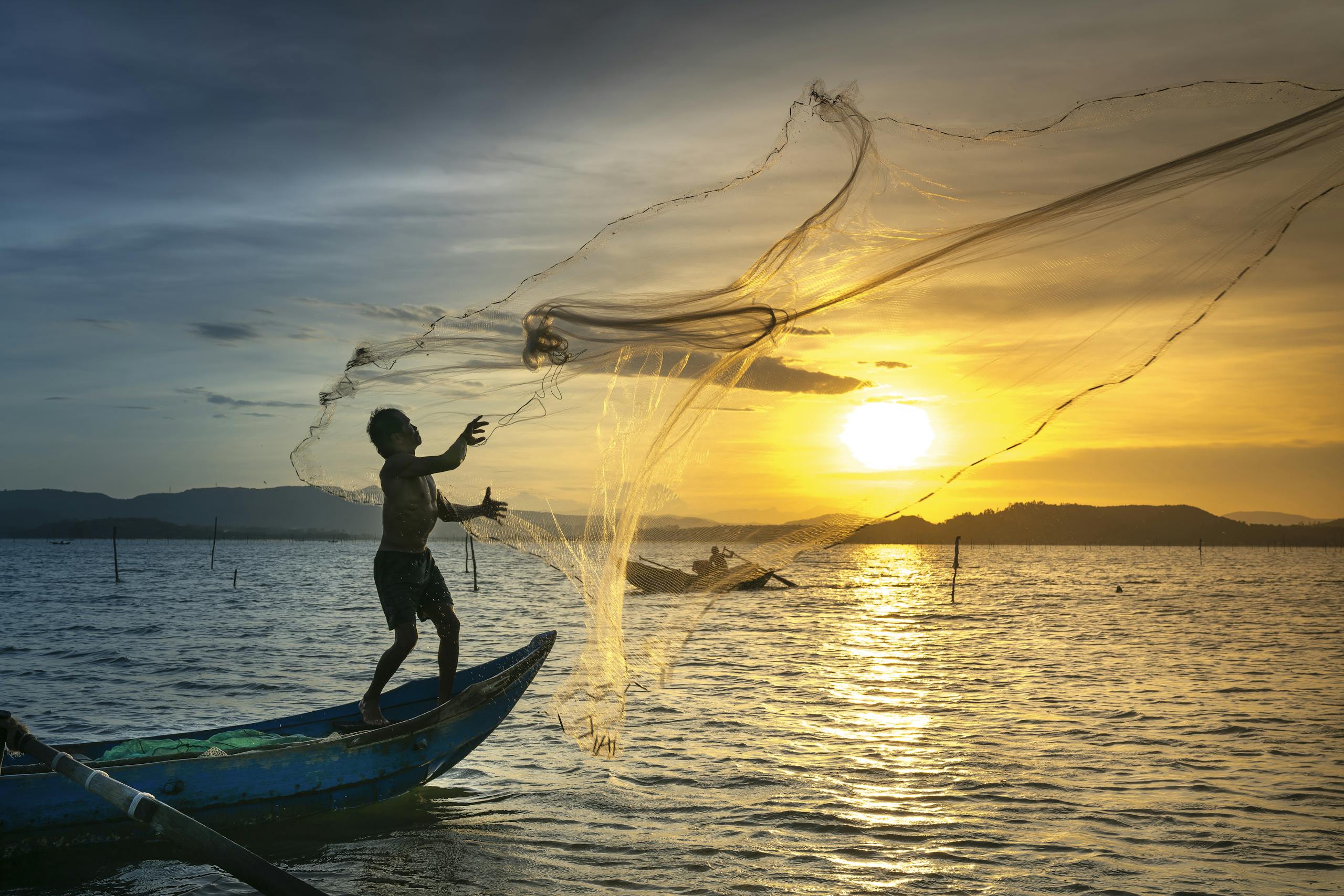
‘There’s plenty of fish in the sea. ‘ Not if we keep fishing like there’s no tomorrow. Let’s talk about overfishing, the ocean crisis, emptying our seas.
It’s time we talked… No, not the one about where baby seahorses come from (although, fun fact: dad does the birthing!). I’m talking about overfishing, the environmental crisis that’s slowly emptying our oceans and threatening the delicate balance of marine life.
What is overfishing?
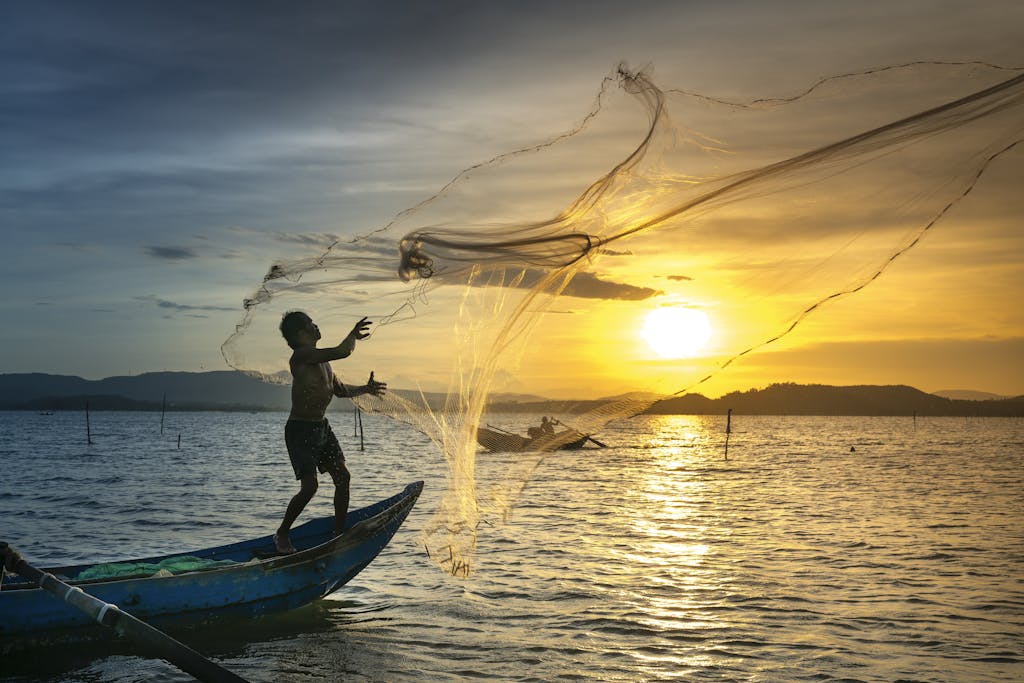
In simple terms, overfishing occurs when fish are caught at a rate faster than they can replenish their numbers through reproduction. This has devastating consequences: fewer fish, depleted oceans and a bleak future for worldwide sushi lovers.
This frantic fish frenzy has tripled the number of overfished stocks in the last 50 years. Now, one in three fisheries is operating beyond sustainable limits.
Spoiler… That’s bloody bad.
What is driving overfishing?
- Rising global demand for seafood
- Industrial-scale fishing (bye-bye fishing rods, hello giant ocean hoovers)
- Weak regulation and rampant illegal fishing
- The false idea that oceans are endless buffets
The cause of this global issue is the demand alongside exponential growth in population rates. We have gone from using a simple pole with a line to catch dinner for the family to stripping the ocean of all life, with trawlers big enough to catch a Megalodon!
Bycatch: the uninvited guest:
Another pressing issue resulting from overfishing is ‘bycatch’. Bycatch is when other marine species, such as dolphins, sea turtles or sharks, are unintentionally caught while fishing for a ‘target’ species. It’s like ordering a pizza and being handed a pair of old football boots with it. Completely unnecessary and unwanted.
It is estimated that 300,000 cetaceans, 250,000 turtles and over 300,000 seabirds are killed annually globally as a result of bycatch. This is an alarming statistic, yet bycatch isn’t at the forefront of marine campaigns. With 38 million sea creatures caught unintentionally each year, we’ve got to do something about it.
It only takes removing 1% of the ocean’s population to have significant implications on marine ecosystems and can jeopardise the long-term populations of marine mammals. Regardless of the fishing technique used, bycatch is a complex problem to prevent.
what are the impacts of overfishing?
- Declining income for local fishermen
- Collapsing ocean ecosystems
- Unsustainable fishing practices, with illegal fishing generating over $36.4 billion annually
Most overfished and vulnerable species:
Here are the marine VIPs currently in the danger zone:
- Bluefin and yellowfin Tuna: Sushi’s poster fish, now critically overfished
- Pacific Salmon: Struggling with climate change and greedy nets
- Atlantic Cod: Once abundant, now a 90% population drop
- Sharks: Finned for soup and other means of exploitation
- Red Snapper, Pollock, Monkfish, Halibut and Scallops: All menu favourites and all under threat
Who’s to blame?
Collectively, we are all at fault. However, I don’t think Danny Andrews’ diet of ‘fish and a rice cake’ is directly responsible for the worldwide overfishing problem. While individual actions matter, the real issue lies in the broader systems of fishing, commerce and consumption. We must demand change to protect marine life and ensure sustainable fisheries for the future.
The real culprits:
- Unsustainable industrial practices
- Government inaction
- Mass consumer demand with little awareness
What can you do to help?
- Check labels: look for sustainable certifications like MSC or ASC
- Diversify your diet: you don’t have to go vegan, but reducing fish consumption will help our oceans regenerate
- Ask for information: be curious about the seafood you’re buying and make sure it’s sustainably sourced
- Support organisations: Greenpeace’s ‘Red List’ is a good resource for identifying vulnerable species
Final Bite:
In summary, overfishing is a complex issue, but by making small changes in our daily habits and demanding more sustainable practices, we can help preserve our oceans for future generations.
Remember, humanity cannot survive on a planet with lifeless oceans.
Do you have questions about overfishing or would like to learn more? Drop a comment below, or feel free to reach out to me on Instagram or via email. Together, we can take action against the overfishing crisis and help preserve our oceans for future generations. Let’s give Sir David Attenborough a well-deserved break from spreading the message, it’s time for all of us to step up and make a difference!



https://shorturl.fm/mNVV8
https://shorturl.fm/3ts32
https://shorturl.fm/vqqGU
https://shorturl.fm/bvsZ1
https://shorturl.fm/CbTNz
https://shorturl.fm/k23Pw
https://shorturl.fm/rYhQe
https://shorturl.fm/57N3s
https://shorturl.fm/TCrTy
https://shorturl.fm/6B4HV
https://shorturl.fm/O6OCV
https://shorturl.fm/8ESoU
https://shorturl.fm/Huis1
https://shorturl.fm/NhCBP
https://shorturl.fm/Vk6Sj
https://shorturl.fm/BtGln