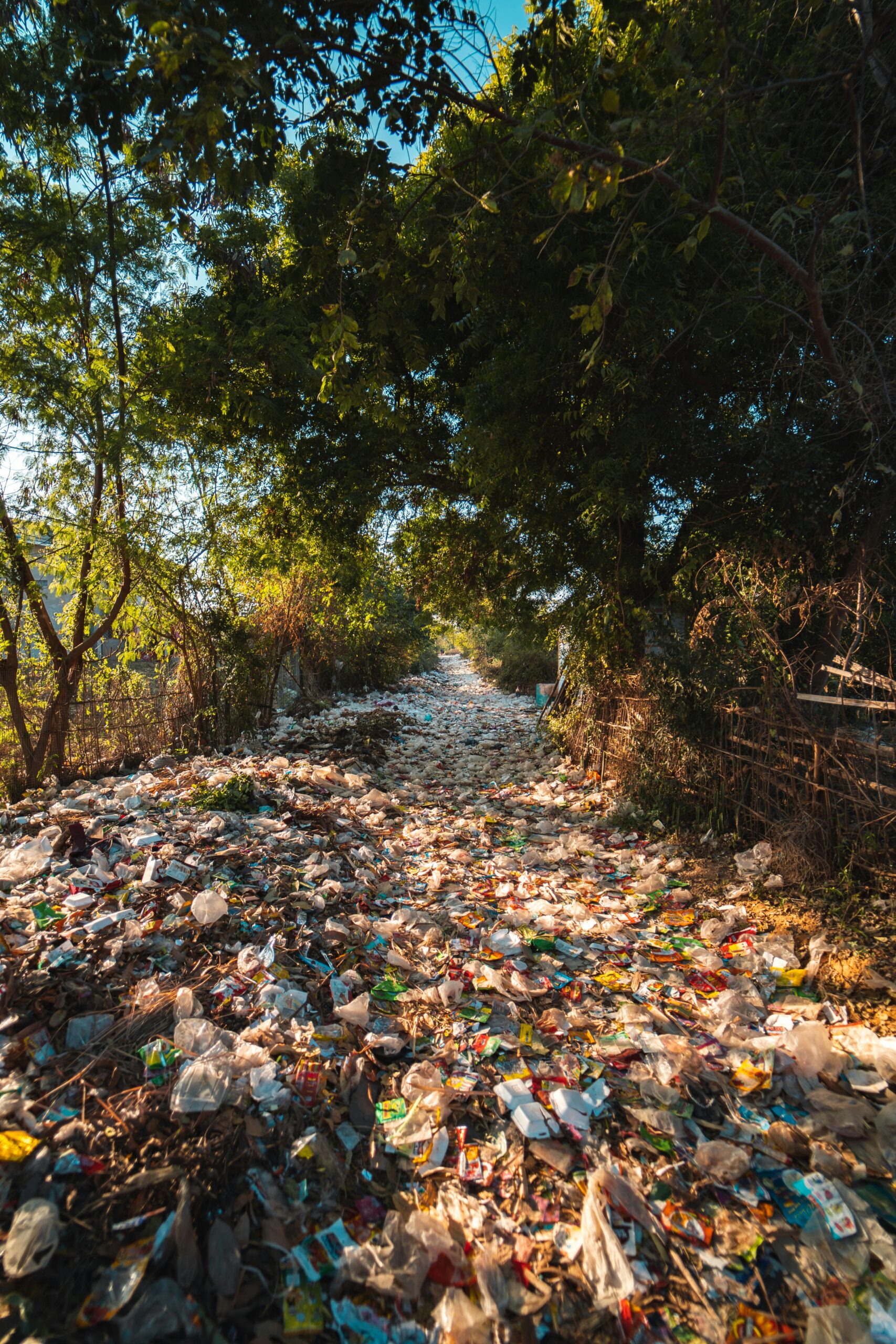
Kelp… There’s plastic everywhere!
Why our oceans (and our bodies) are becoming plastified and what can we actually do about it?
If you’re a diver, surfer, scientist, beach bum, or simply a human being who hasn’t been living under a rock for the last twenty years, you already know this: we have a plastic problem…
And not a mild, “oops, I forgot my tote bag” problem.
It’s a full-blown, “soon we’ll be snorkelling through a floating landfill” problem.
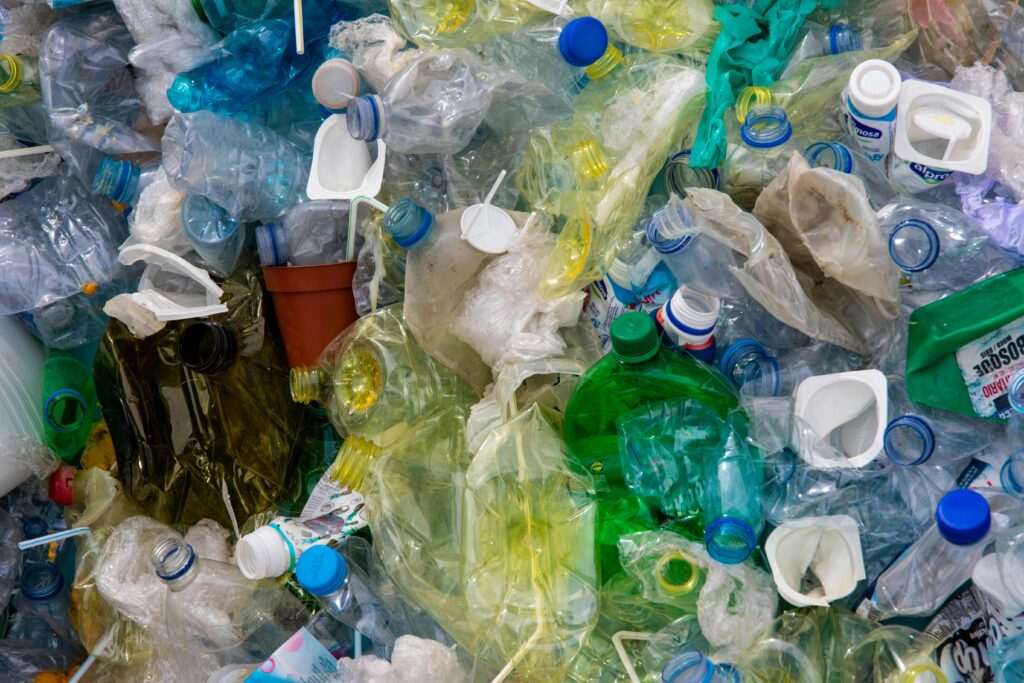
Every year, millions of tonnes of plastic enter the ocean. New reports from the Pew Charitable Trusts state that plastic pollution is expected to double by 2040. That’s a hell of a lot of plastic and a huge problem for ocean lovers. This plastic breaks apart, sinks, floats, washes back to shore, gets eaten by wildlife, and eventually ends up in our bodies, too. Congratulations, we’re slowly becoming human snowglobes filled with microplastic confetti.
So… how did it get this bad? And more importantly, what can we do about it?
How bad is it really?
Here’s the cheerful truth bomb:
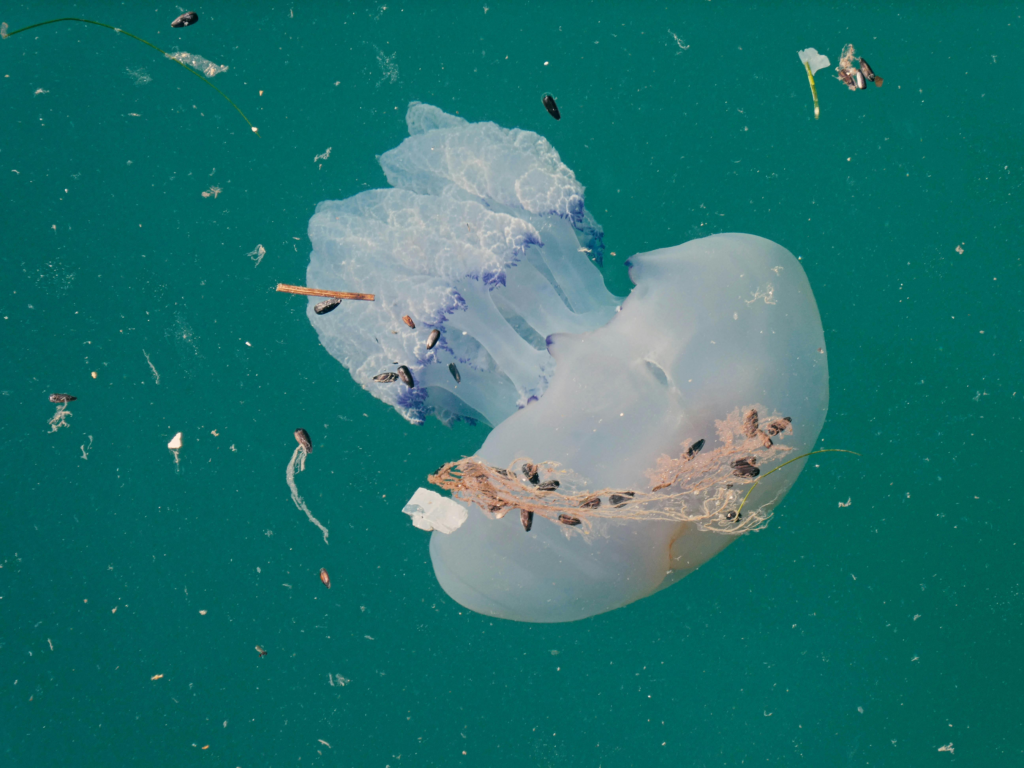
It’s now more common for marine animals to be found with plastic in their stomachs than without it. Microplastics show up in seawater, seafood, and yes, in us. Ironically, the Karens of the world who hate on the youth of today for drinking Monster Energy and chain-smoking cigarettes are also at risk of lung failure from ingesting food supposedly rich in health benefits and overpriced at their local Waitrose. News flash… tins of sardines may soon become just as harmful to the body, specifically our lungs and blood, as a pineapple ice vape (metaphorically speaking). All thanks to our BFF microplastics!
Scientists have now detected microplastics in:
- Human Blood
- Human Lungs
- Kidneys and livers
- Even placentas
The average person unknowingly consumes tens of thousands of microplastic particles each year… Cute! Love that for us!
Meanwhile, plastic production has skyrocketed to over 400 million tonnes a year, and a massive chunk of it is used just once before being binned. A scary amount escapes waste systems entirely.
Where is all the plastic coming from?
Short answer: EVERYWHERE.
Longer answer: Pretty much every human activity feeds into the plastic problem.
Land-based sources: (Over 75% of marine plastic pollution)
- Rubbish blown or washed into waterways
- Mismanaged waste and stormwater
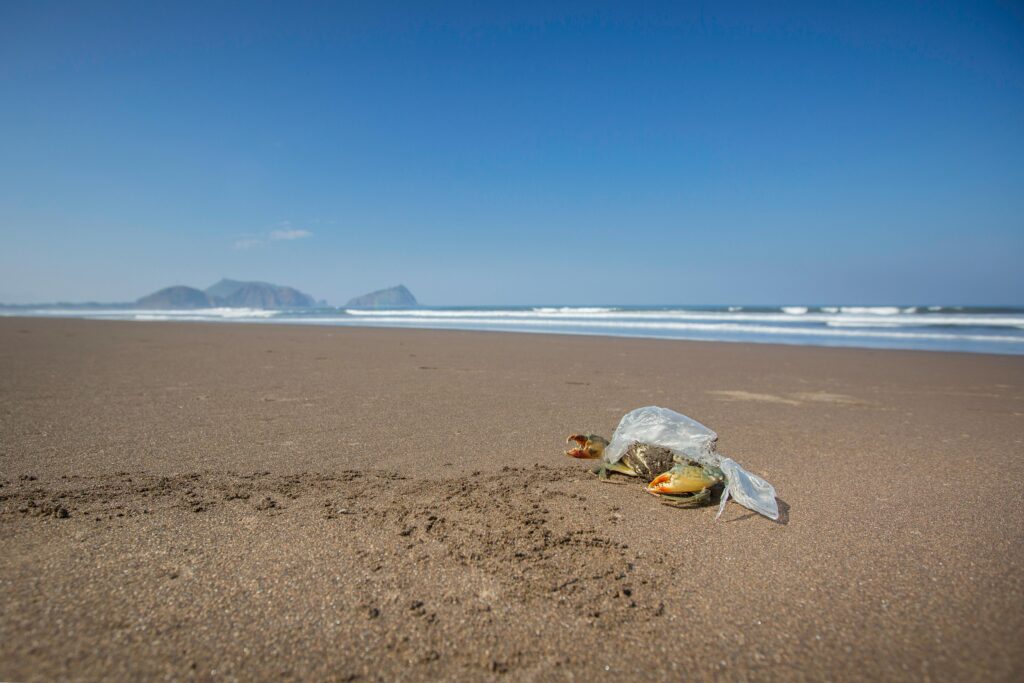
- Beach litter
- Tourism hotspots
- Microfibres from washing synthetic clothes
- Tyre dust and industrial debris
- Panic-buying chaos (2020, I’m looking at you…)
Ocean – Based sources:
- Abandoned or lost fishing gear
- Dumped wastes from vessels
- Aquaculture equipment
- Nets, ropes, longlines, ghost gear that keeps killing wildlife long after it’s forgotten
Once plastic enters the ocean, sunlight, waves, and friction grind it into tiny particles that absorb harmful chemicals. These plastics act like toxic sponges, passing those contaminants into the tissues of whatever eats them, from plankton to whales.
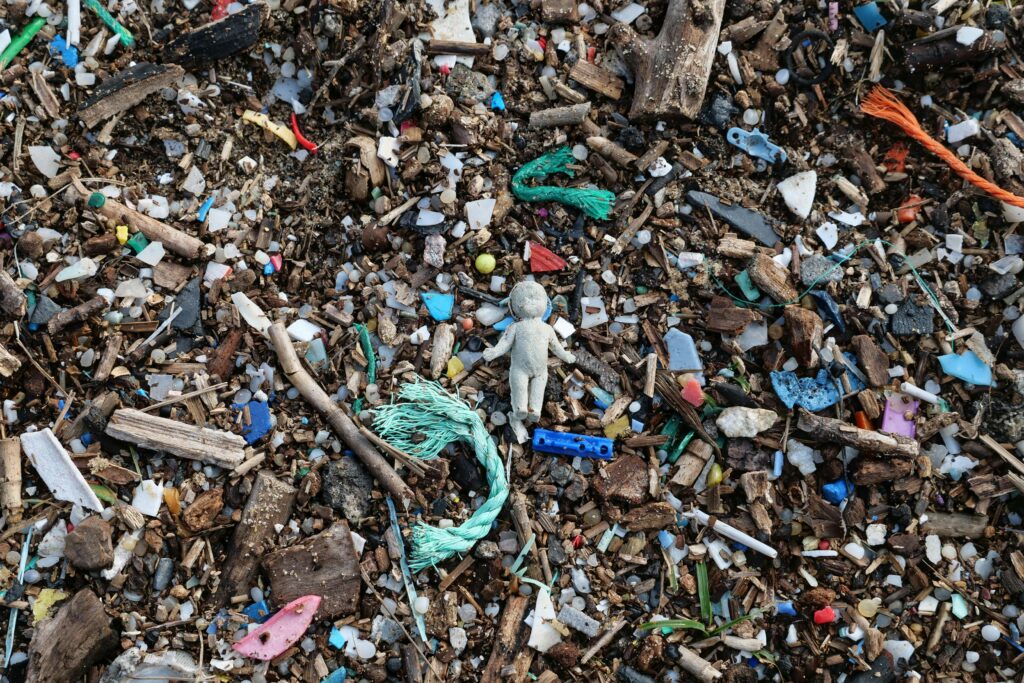
How plastic affects us:
If you’ve ever thought, “It sucks for the sea turtles, but it doesn’t really affect me“, brace yourself…
Microplastics have been discovered in organs that really shouldn’t contain plastic.
- Lungs
- Bloodstreams
- Livers
- Kidneys
- Reproductive tissues, including placentas
Many plastics contain chemicals linked to hormonal disruption, fertility issues, cancer risks, and developmental problems.
We aren’t separate from the problem; we’re part of the food chain that swallows it.
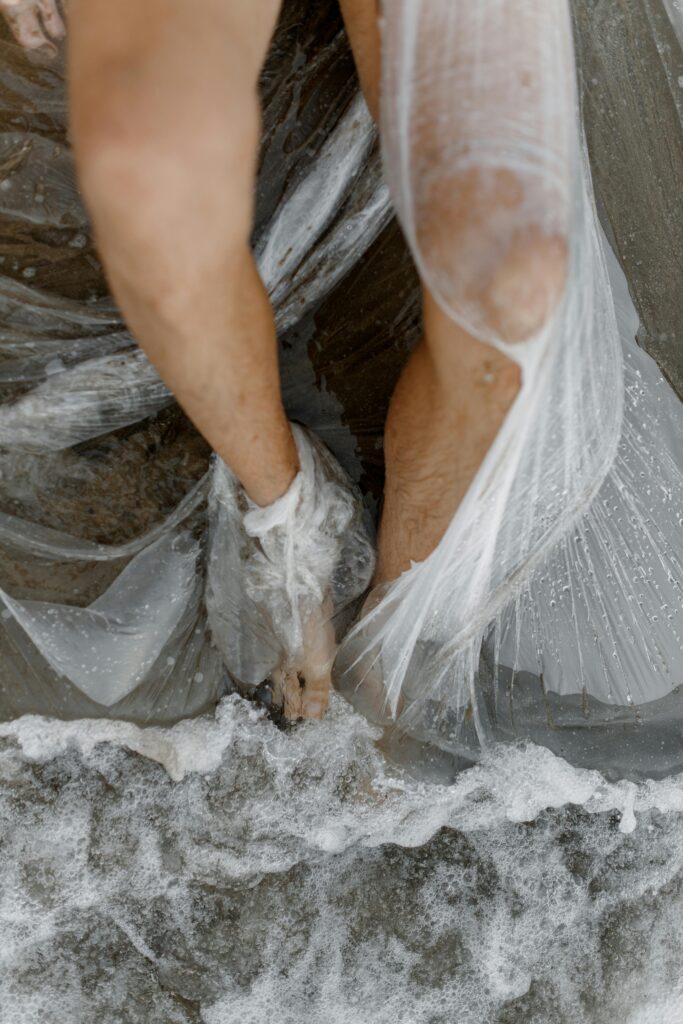
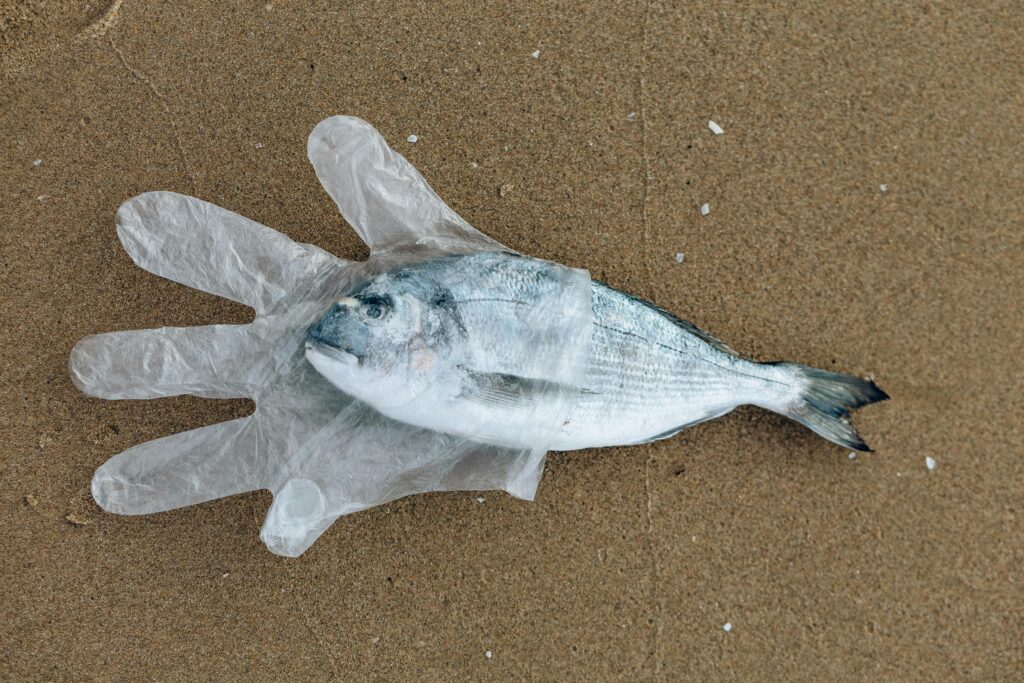
How plastic affects marine life:
As a diver, this is the part that hits the hardest. You see it up close.
Marine animals get hit in two major ways:
1. Ingestion:
- Plastic blocks their digestive systems
- Causes internal damage
- Makes them feel full -> leading to starvation
- Moves toxins into their tissues and organs
Turtles mistake bags for jellyfish, fish swallow bright plastic fragments that look like eggs, and whales have washed ashore with over 100kg of rubbish in their stomachs… All in all, these guys are straight-up not having a good time, and we’re primarily responsible for such a severe buzzkill
2. Entanglement:
- Nets trap whales and dolphins
- Lines strangle seals and turtles
- Ghost gear continues ‘fishing’ long after it’s abandoned
It’s unnecessary, heart breaking and completely preventable.
The great pacific garbage patch:
The GPGP sits in the North Pacific Gyre between Hawaii and California, and it’s enormous.
Around 1.6 million square kilometres of swirling debris. That’s:
- 2× the size of Texas
- 3× the size of France
It’s not an island you can walk on.
It’s a giant soup of microplastics, broken gear, and old nets circulating endlessly with the currents.
And because larger objects constantly break down, the longer they exist, the worse they become.
The future if we don’t act now…
If we stay on our current path:
- By 2050, the ocean could contain more plastic than fish (by weight).
- Plastic entering the ocean could triple by 2040.
- Microplastics will spread into every ecosystem on Earth, soil, rivers, food chains, the air we breathe.
- Plastic production will become a major driver of climate change, accounting for up to 15% of the global carbon budget.
- Coral reefs, mangroves, and coastal ecosystems will face collapse.
- Trillions of dollars could be lost in tourism, fisheries, and coastal economies.
This isn’t just an ocean problem.
It’s a health problem.
A climate problem.
An economic problem.
A human problem.
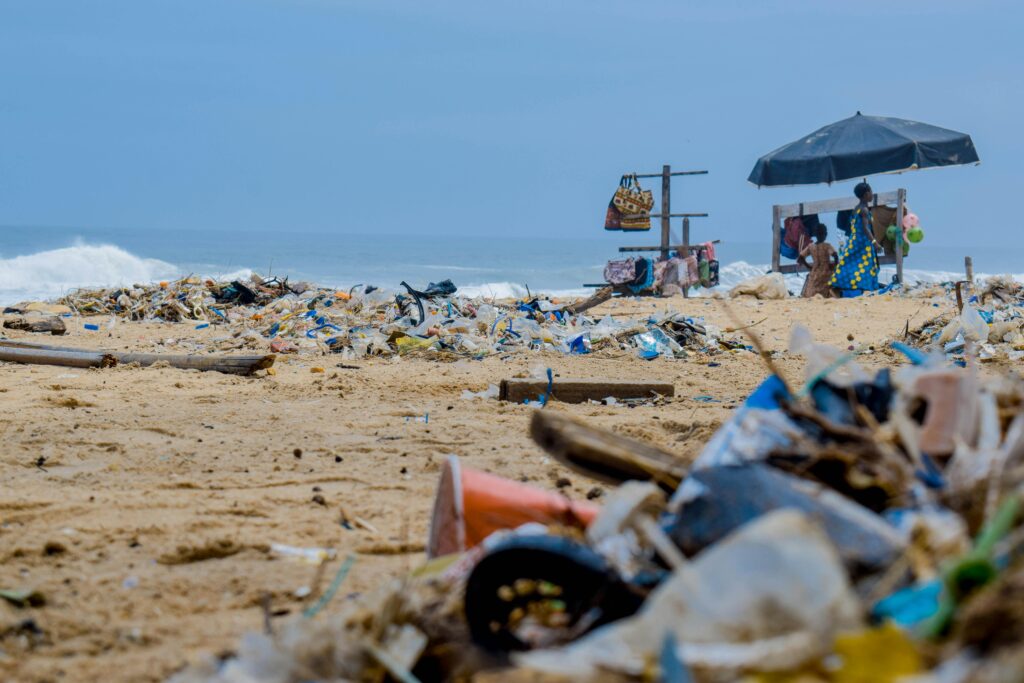
So… what can we actually do?
(This is the part where we get hopeful again.) It is estimated that if governments and companies actually pull their fingers out and ditch plastic, plastic pollution can be cut by 83% by 2040. So yeah, there is quite a bit of hope to hold on to, but it all depends on each of us to make a change and commit to it.
Here are realistic swaps that actually help:
1. Cut Single-Use Plastic
Hate paper straws? Cool. Buy glass or stainless steel ones.
Invest in a reusable water bottle, even I haven’t broken mine yet, and I’ve dragged it across three countries and far too many overnight Greyhound buses.
2. Pick Up Three for the Sea
Every time you visit the beach, take three pieces of rubbish home to dispose of properly.
Takes seconds. Makes a difference.
3. Smarter Shopping
- Choose loose fruit and veg
- Use beeswax wraps instead of cling film
- Visit refill stores
- Switch to shampoo bars (they travel like a dream)
4. Reduce Synthetic Clothing
Fast fashion = microplastic confetti factory.
If you buy synthetics, use a microfibre-catching laundry bag.
5. Support Better Brands
Opt for businesses using recycled, low-waste, or plastic-free packaging.
Translation:
Anyone but Shein. Sweet Poseidon, please… NOT Shein.
the final wave:
Plastic pollution isn’t an “ocean issue.”
It’s a human issue that just happens to show up most visibly in the sea because that’s where our rubbish ends up.
But the good news?
Small actions scale.
Individual choices influence demand.
Demand influences industries.
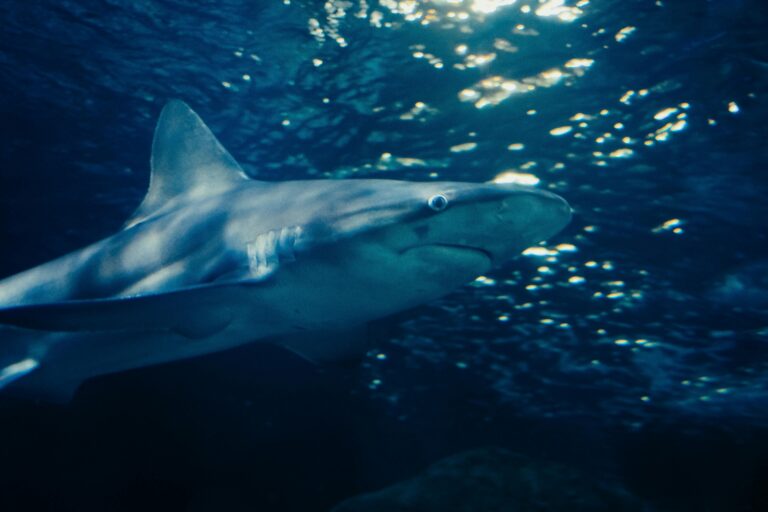
And despite what Donald Trump says, sharks are affected by plastic because they’re literally chewing through the junk we’ve dumped into their homes. We can absolutely do better.
The ocean deserves better.
Let’s start today.


Если решили организовать поездку из Калининграда в Зеленоградск, советую воспользоваться электричкой Калининград — Зеленоградск: это оптимальный и шустрый способ добраться, а посадка и высадка у ж/д Калининграда предельно комфортны. Расстояние от Калининграда до Зеленоградска приблизительно 40 км, и по пути можно насладиться видами экологических достопримечательностей, включая Куршскую косу. Для исчерпывающего расписания и маршрутов электрички и автобусов стоит посмотреть информацию на [url=https://venagid4.ru/]шаакен калининград[/url] .
В Калининграде желательно обязательно навестить такие места, как Калининградский собор и исторический замок Шаакен, размещенный в области. Ценители рынков не игнорируйте блошиный рынок — там можно найти уникальные вещи и антиквариат. Поездка в город Янтарный или на базы отдыха области тоже будет великолепным дополнением к отдыху, особенно если намереваетесь совместить культурную программу с путешествиями на природе и релаксацией на пляжей.
Join our affiliate program and watch your earnings skyrocket—sign up now!