Rippin’: How to spot and survive a Rip
I planned to surf with some friends on Easter Sunday. There were inconsistent sets ranging in size from beginner to guaranteed wipeouts. As we stood by the shore my friend looked at me and pointed at a rip and said ‘Sick we will take the rip so we can go out the back’ (my first time ‘out back’- shitting it, but trying to play it off cool…).
Internally, I was freaking out. One: I’d NEVER been out the back before- I’m a pretty novice surfer. Two: Someone literally drowned two days ago because of a rip. Three: since I was a kid, it’s been drilled into me- DO NOT GO NEAR A F*****G RIP!! But there I was, smiling like an idiot, nodding along like ‘yeah alright, love a casual brush with death’.
To my amazement, the rip did successfully take us out back, where we sat chatting, sitting on our boards, oblivious to the gigantic set about to take us for a ride. I thought she was a bloody genius, though, to use the water to her advantage and make her paddle out a whole lot easier. It got me thinking, are rips really as scary as we make them out to be? Or are we just not taught how to deal with them properly?
So what is a Rip?
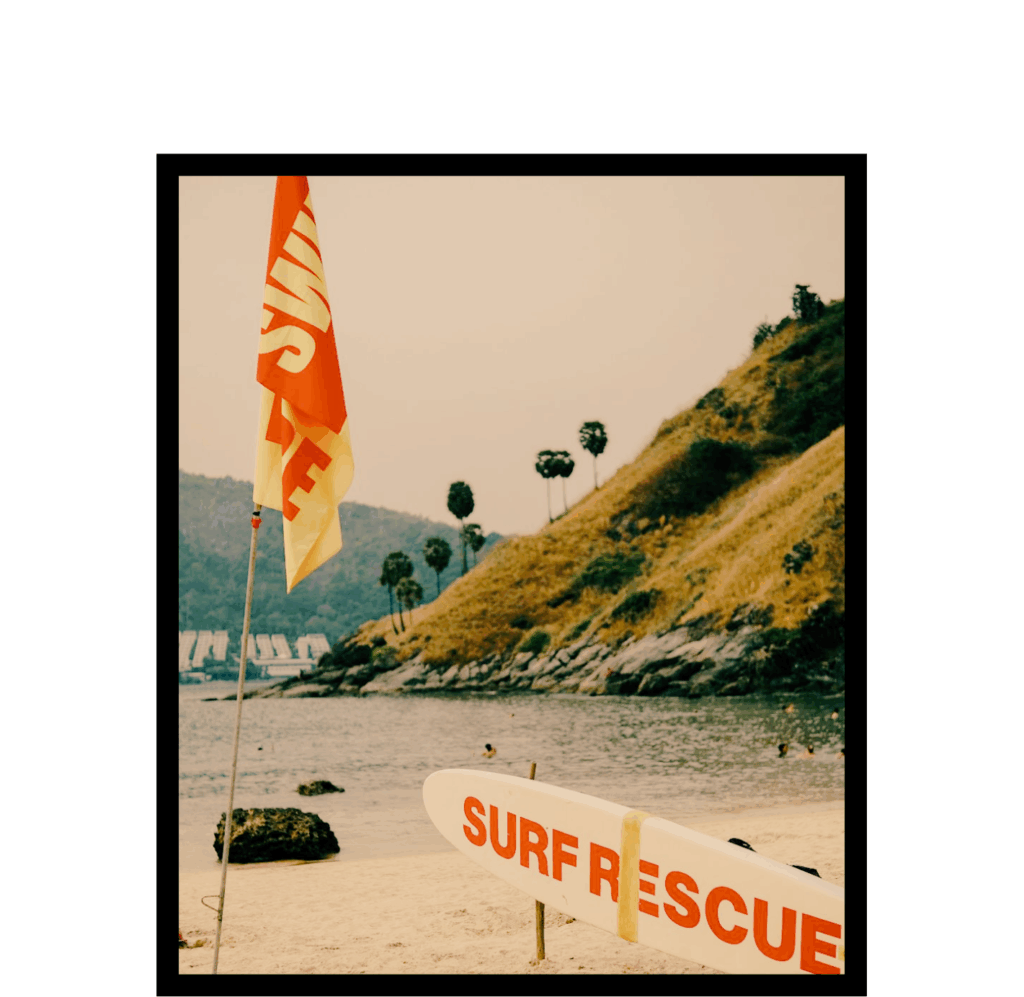
A rip current is essentially water flowing back to sea. They are one of the most significant and common hazards on beaches worldwide.
As waves come into the beach and break over a shallow sand bar, a force of water builds up on the shoreline. You get variable heights of the water. Drives currents that travel across the surf zone, and the offshore winds contribute to the current. Rips move in circular currents. Flows are more complex than once thought. The strength of rips depends on water speed and turbulence.
Contrary to popular belief, not all rips are evil death traps- but they are responsible for more deaths in Australia than sharks, stingrays and dramatic beach rescues combined. In 2023, there were 28 deaths related to rip currents. In Australia alone, more than 17,000 rips are found daily on local beaches. Approximately 4.2 million Australians will be caught in a rip at some point in their lifetime. About time we educated ourselves, then take some pressure off our lifeguards.
Types of Rips:
- Low Energy: Chill rips, these guys are the most common and just hang between sandbars.
- Flash Rips: AKA the ADHD cousin. Fast, unpredictable and most likely to show up in bad weather.
- Headline & Fixed Rips: Found near rocks, jetties or headlands. Permanent and kinda rude.
How to Spot one?
Spotting a rip can be pretty challenging, even for pro swimmers and surfers. Here are some tips:
- Darker water: Think of it like a natural warning sign… leading straight to chaos.
- Calmer spots: That peaceful gap? It’s a trap… Like a too quiet toddler. Something is SUS!
- Seaweed, sediment & sand: If it looks like the ocean is vacuuming up sand, it probably is.
- Rippled surface: Rips surrounded by smooth water show currents moving in various directions.
- Fewer breaking waves: Smooth patch? Don’t be fooled, that’s the ocean’s way of saying ‘come on then let’s see what you’ve got…
What to do if you’re unintentionally stuck in one?
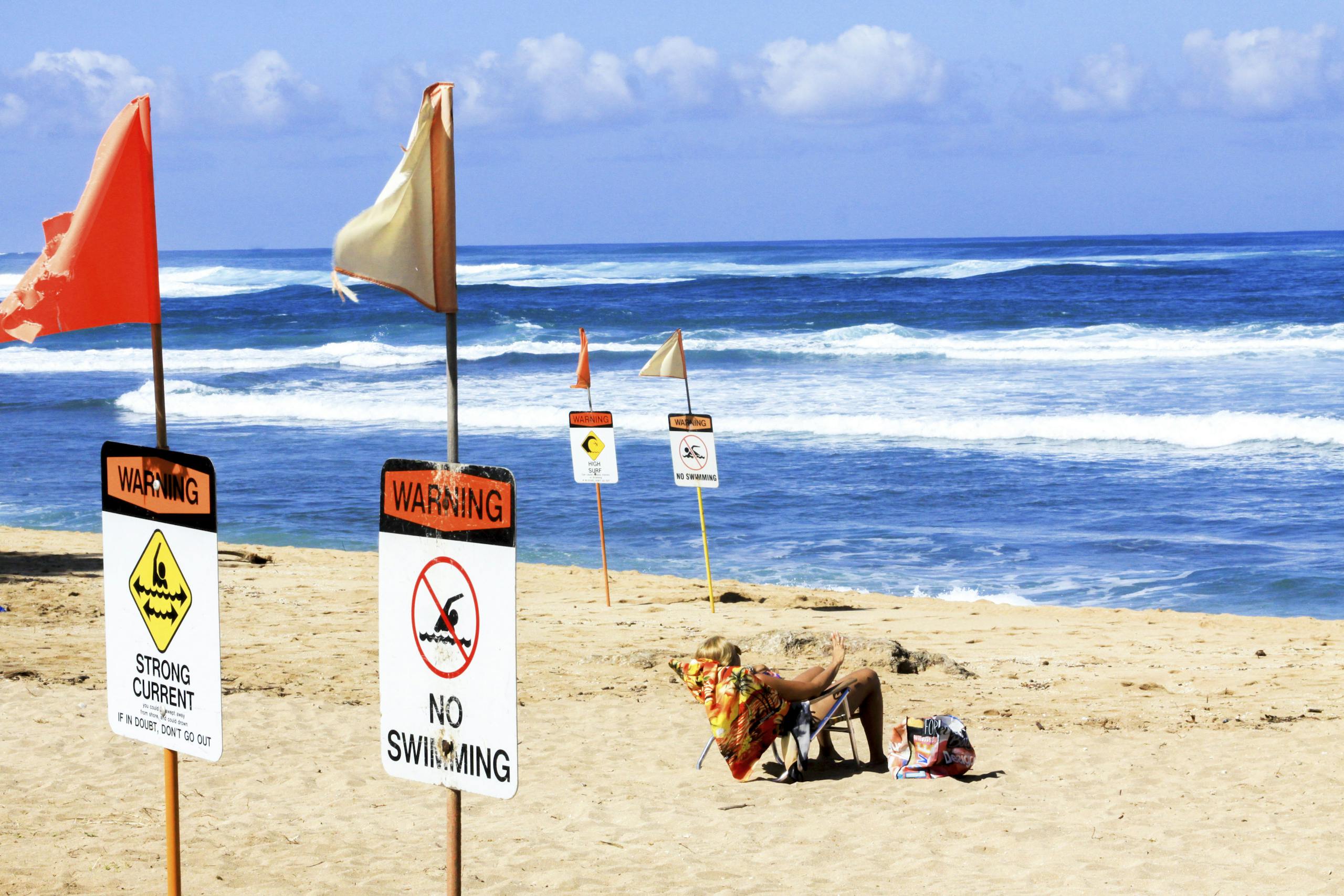
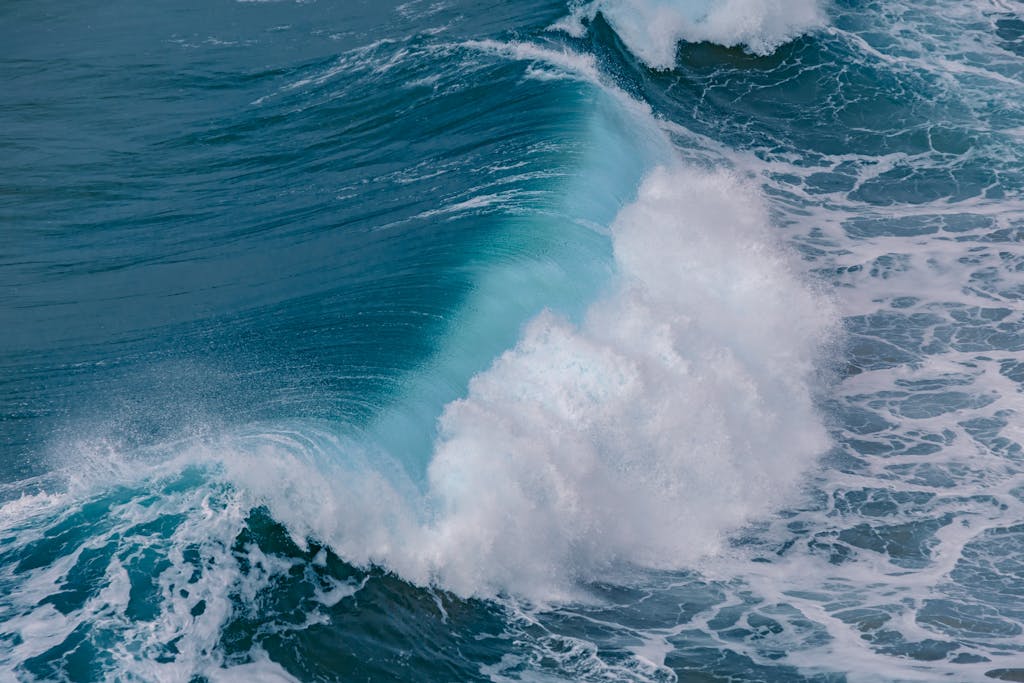
So, here we are- you’re caught in a rip. Hate to say it, but you chose to take that dip. It’s your responsibility to check the conditions and swim between the flags at a patrolled beach, especially if you’re not a confident swimmer.
First things first: DON’T PANIC.
Yeah, easier said than done when you’re being pulled out to sea. But panicking only makes things worse. If you try to swim against the rip, you’ll burn through your energy fast and put yourself at serious risk of drowning.
Here’s what to do instead:
- Just breathe, relax, and ride it out. Rips don’t last forever.
- Feeling strong? Swim parallel to the beach, toward breaking waves, not directly back to shore.
- Raise your hand for help. Lifeguards are watching. Give them the ol’ “hey, I’m not dead yet” wave.
- Know your limits. If you’re not a strong swimmer, don’t wade into wild surf outside the flagged zone. This is not the time to test yourself.
- When in doubt, float it out… Seriously, just float.
Pro tip: Even if you get pulled out farther than you expected, rips usually lose strength past the surf zone. That means you’re not headed for New Zealand, just a bit offshore. Float, wait it out, then paddle sideways and back in when you’re free of the current.
How to use Rips to your advantage:
Rips are scary, but they can be advantageous for adrenaline junkies or big-wave surfers. Most surfers even purposefully enter a rip current by choice. Wild, I know. However, if you’re familiar with rips and the beach, you can act accordingly.
Surfers utilise rips as an ocean piggyback to get past the break line and into a good position in the lineup without wasting energy with a mighty paddle. So you can use your energy for a session of a lifetime, or an hour-long Wipeout!
Even surfers, if caught in a rip unexpectedly, can be at risk of things going south. Again, don’t panic; unlike swimmers, you have a handy flotation device strapped to your leg. So relax and embody your inner Chicken Joe. The rip will spit you out. If you don’t fancy a journey out to sea, you can swim across the current and make your way back to shore.
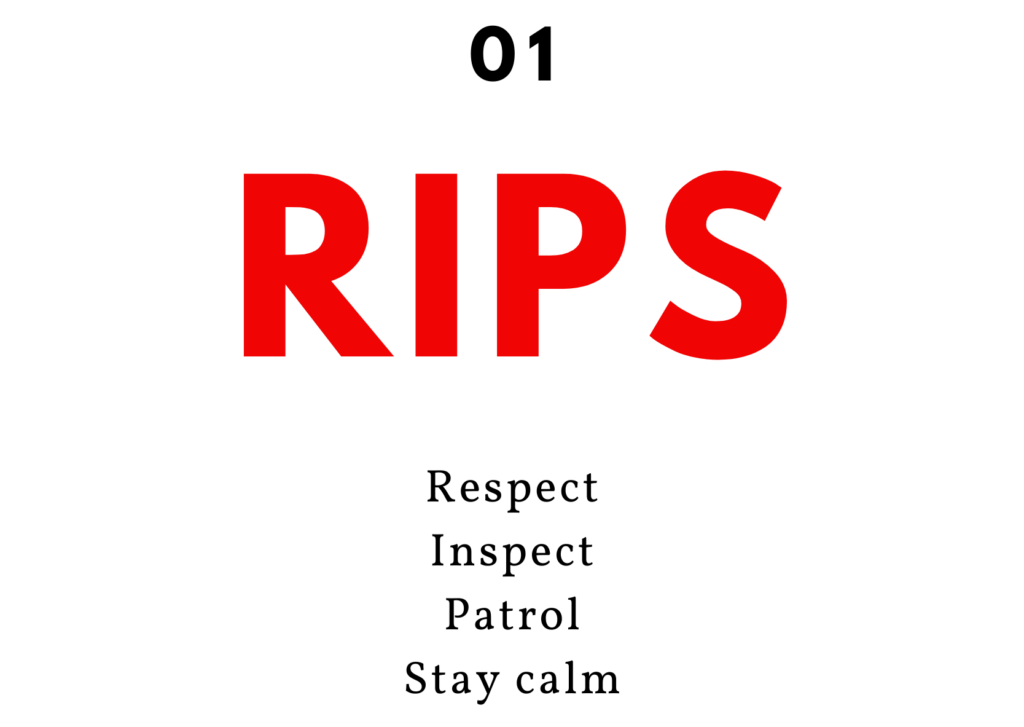
Remember RIPS:
- R: Respect the ocean. It doesn’t care about your confidence or your £100 bikini.
- I: Inspect. Assess the ocean before going in. If it looks sus it probably is…
- P: Patrol. Do lifeguards patrol the beaches? If so, swim within the designated flags.
- S: Stay calm and ride out the Rip.
Final wave: Ride Smart; Not Scared:
So next time you head to the beach, don’t fear the rip. Respect the water, read the conditions, and remember: you’re not being ‘soft’ by swimming between the flags – you’re being smart (and giving the lifeguards one less reason to sprint in thongs). Whether you’re paddling out like a pro or flailing like a sunburnt seal, knowing how rips work gives you power, not panic.
Float it out, surf safe, and NEVER trust a calm-looking patch of water again…
Ever accidentally taken a rip express to the middle of nowhere? Or confidently pointed at the ocean, pretending you know what’s going on? Same. Drop a comment below or reach out to me on Instagram or via email, salty chaos loves company. If you want more ocean survival stories, questionable surf logic, and semi-useful advice for staying alive in the sea, hit follow on the blog. Let’s keep getting swept out (safely) together.



https://shorturl.fm/KBZab
https://shorturl.fm/yxuH8
https://shorturl.fm/HnKcr
https://shorturl.fm/Zq42i
https://shorturl.fm/2JGR7
https://shorturl.fm/2PsqM
https://shorturl.fm/Annsr
https://shorturl.fm/D2wKy
https://shorturl.fm/MrX0t
https://shorturl.fm/PnqlW
https://shorturl.fm/1mzBU
https://shorturl.fm/O9hcm
https://shorturl.fm/nCL3O
https://shorturl.fm/CyJYn
https://shorturl.fm/gpiYl
https://shorturl.fm/sQLDH
https://shorturl.fm/rLs3y