Why we fall in love with the ocean (The psychology of the big blue)
Call me dramatic, but I’ve always known saltwater could heal me. Anytime life threw chaos my way, a breakup, exam stress, or a general “why am I like this?” spiral, all it took was diving into the ocean. The second the cold water hit my skin, whatever I’d been clinging onto dissolved. My shoulders dropped. My breath returned. My brain finally shut up.
And it turns out I’m not the only one.
Science has finally caught up to what ocean people have known forever: the sea changes us, psychologically, biologically, emotionally, and spiritually.
So buckle up, salty souls.
We’re diving into the psychology, biology, and ancient pull of the Big Blue… and why so many of us run straight to the ocean the moment life gets heavy.
Blue mind: The psychology of water:
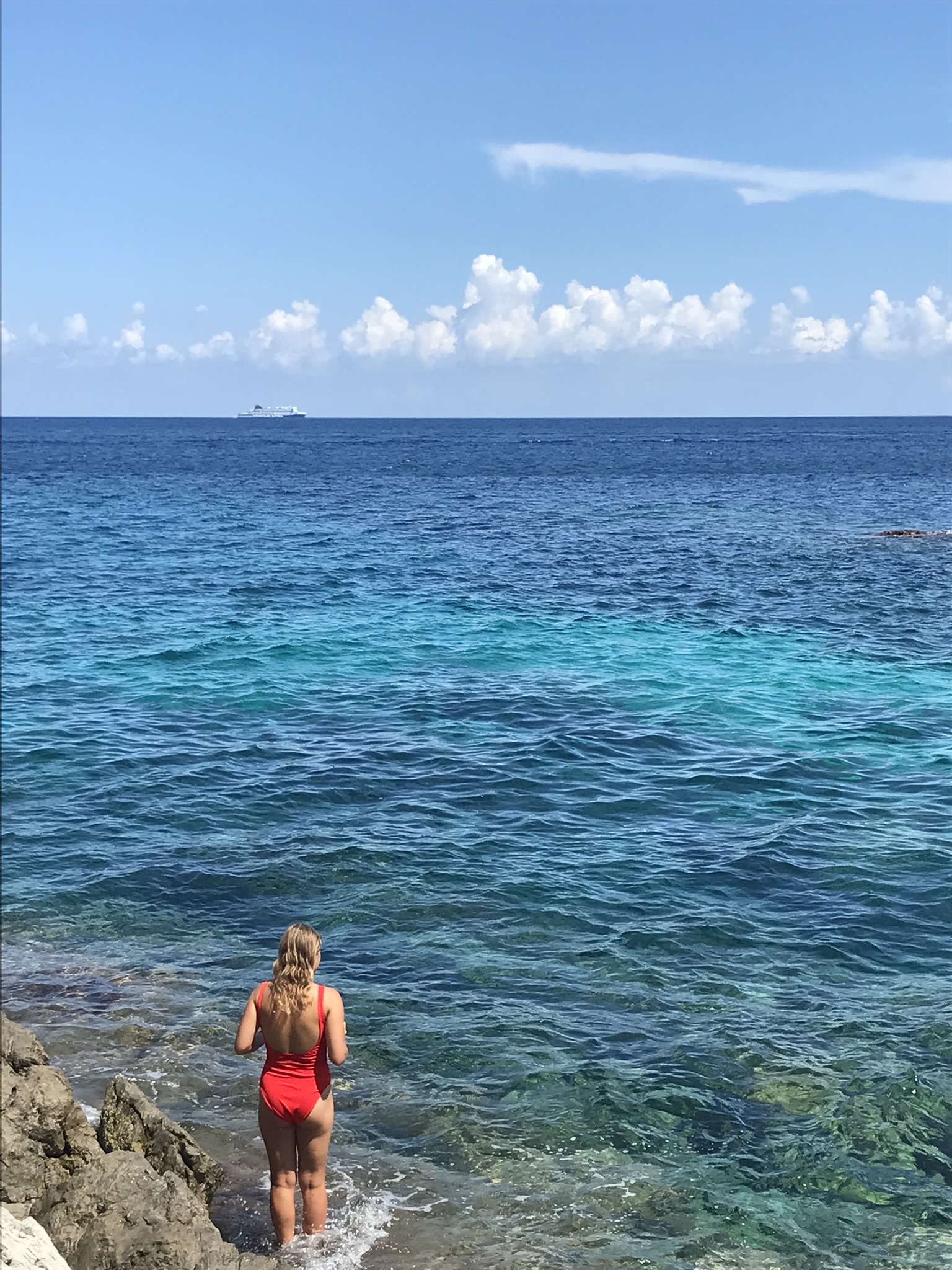
There’s a name for that instant calm you feel the moment you hear the waves: Blue Mind.
Marine biologist Dr. Wallace J. Nichols coined the term to describe the meditative state your brain enters when you’re around water. The ocean’s repetitive, rhythmic motion creates what psychologists call “soft fascination”. Gentle sensory input that gives your brain permission to switch off the constant analysing, scrolling, planning, and stressing.
When you look at the ocean:
- Cortisol (stress hormone) drops
- Your heart rate naturally slows
- Blood pressure stabilises
- Your breath deepens
- Serotonin and dopamine rise
Put simply: your brain sees the ocean and literally exhales.
This explains why a beach walk feels like therapy, why floating makes your thoughts soften, and why diving feels like hitting a hard reset on your internal system.
The science behind the salt:
And here’s where it gets even more wild:
Negative ions, abundant around crashing waves, may improve mood and boost serotonin. These ions are used in expensive therapy devices, yet the real thing is free, wild, and vastly more beautiful.
Salt minerals such as magnesium, potassium, and calcium regulate the same neurotransmitters involved in stress, anxiety, and emotional tension. No wellness retreat required, the ocean literally recalibrates your nervous system.
Attention Restoration Theory:
Our brains are battered daily by directed attention, work, phones, overstimulation.
Nature, especially water, gives that system a break.
ART shows that:
- Natural environments restore mental focus
- “Soft fascination” replenishes cognitive energy
- Even photos of nature can have an effect
No wonder we think clearer by the coast. Our brains are resting, restoring, and rebalancing.
The Biology: How the Ocean Physically Heals Us:
The ocean doesn’t just change our mood; it changes our physiology.
Seawater is magnesium-rich, relaxing muscles, improving sleep quality, and reducing inflammation.
Cold water immersion triggers a powerful hormonal cocktail:
- Endorphins (natural painkillers)
- Adrenaline (alertness)
- Brown fat activation (metabolism + resilience)
Saltwater is naturally antibacterial, helping minor cuts heal faster.
Ocean air is packed with charged particles, which may enhance oxygen absorption and increase mental clarity.
Before your mind even processes what’s happening, your body is already saying:
“Thank you. I needed this.”
Evolution: We are designed for water:
Humans are basically land-based mer-creatures.
We’re 70% water.
Our blood plasma is almost chemically identical to seawater.
And historically, humans evolved near coastlines; where food was abundant and survival was easier.
This could explain why:
- Coastal environments lower stress more than forests
- Water sounds trigger feelings of safety
- Billions of us instinctively migrate to the ocean when we need peace
There’s something ancient in us that recognises the ocean not just as a destination,
but as a home.

Emotional and spiritual pull:
Ask any ocean lover why they’re obsessed and you’ll get answers like:
“It makes me feel small.”
“It clears the noise.”
“It reminds me what matters.”
The ocean has a way of stripping life back to what’s real.
It absorbs the heaviness you can’t hold anymore.
It grounds you, humbles you, and rebuilds you; quietly, powerfully, and without asking for anything in return.
It’s the place people go to cry, scream, celebrate, breathe, reconnect, and restart.
Adventure, Flow State & Feeling Alive:
But it’s not all serenity.
Ocean sports such as surfing and diving activate flow state, a neurological sweet spot where your brain is fully present, deeply focused, and effortlessly joyful.
Flow increases dopamine, boosts creativity, and enhances overall life satisfaction.This is why ocean people are often the happiest people you meet.
The sea lets us play again.
It reminds us what it feels like to be alive.
A personal memory from the big blue:
There have been countless times when the ocean has stitched me back together, more than I can count.
One memory sits above the rest.
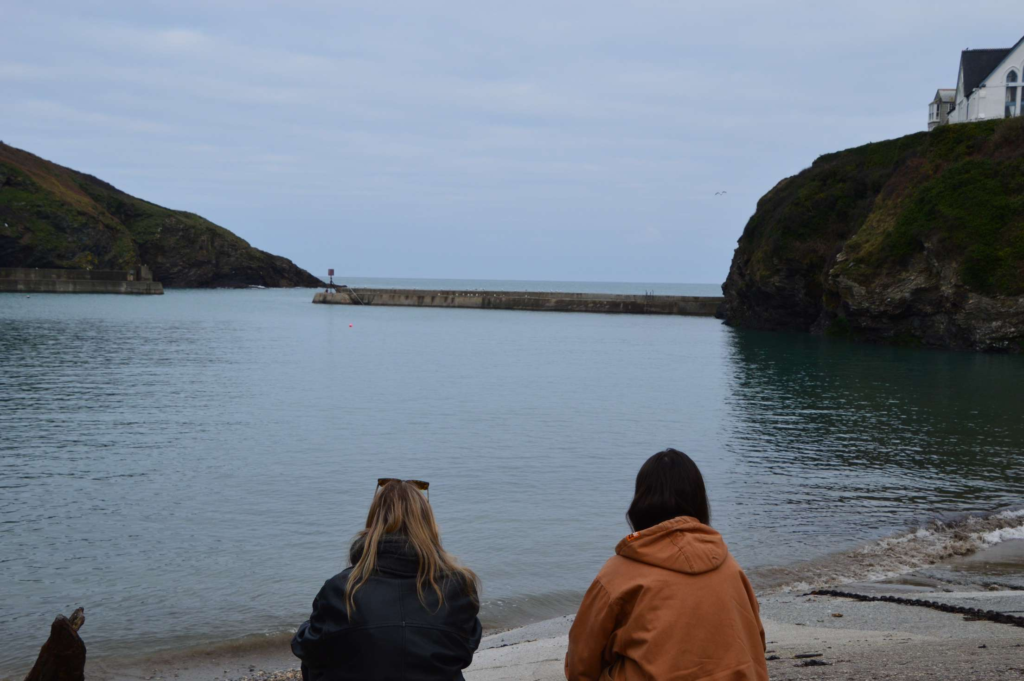
After a toxic breakup and the pressure of final exams, I remember feeling itchy in my own skin, anxious, overstimulated, trapped. I grabbed my towel, chucked on my swimmers, and sprinted to the beach, holding back tears.
I threw myself into the icy UK water and felt everything shift.
Like weights sliding off my chest.
As I floated there, I realised nothing in my life was as urgent as it felt on land. My problems were quite literally washed away.
The ocean didn’t fix everything.
But it reminded me: I can breathe.
And ever since, whenever life feels too loud, I find myself doing the same thing, whether the beach is 5 minutes away or 40. The ocean has never once failed to calm me.
The ocean heals us; but it needs saving too:
Our connection to the ocean is powerful, but it comes with responsibility.
Healthy oceans =
Healthy humans.
Healthy communities.
Healthy ecosystems.
When we protect reefs, reduce plastic, choose sustainable seafood, and support conservation projects, we’re safeguarding the very thing that keeps so many of us afloat.This is why Radical exists,
to build a community of ocean lovers who care enough to act.
How to utilise the ocean to prevent a menty b:
You don’t need to dive to 30m to feel the benefits. Try:
- A mindful swim or cold dip (2 minutes can reset your system)
- Barefoot beach walks
- Floating meditation
- Listening to ocean soundscapes
- Snorkelling or gentle underwater time
- Deep breathing facing the waves
Tiny habits. Massive impact.
The ocean’s most measurable health benefits:
1. Boosted Immunity
Cold ocean dips increase red blood cells by 5–20% and white blood cells even more, enhancing oxygen flow, energy, and immune strength.
2. Improved Skin & Reduced Inflammation
Saltwater minerals ease acne, reduce redness, and help wounds heal faster. It’s a natural detoxifier, like a free spa day, minus the Bali price tag.
3. Better Sleep
Ocean exposure stabilises blood pressure and improves melatonin cycles.
Negative ions from waves may increase serotonin, which supports deeper sleep.
So yes, your ocean swim might actually be the best sleep aid you’ll ever use.
Final wave of reflection:
We fall in love with the ocean because it awakens something primal, biological, emotional, and spiritual within us. It’s our sanctuary, our playground, our teacher, our reset button.
And every time life feels heavy, the ocean offers the same message:
Come home.


https://shorturl.fm/LvJxO
https://shorturl.fm/uF2Cj
https://shorturl.fm/ClLOn
https://shorturl.fm/BQdLv
https://shorturl.fm/PGWnK
https://shorturl.fm/fQwJ1
https://shorturl.fm/5j9f3
https://shorturl.fm/q5j6F
https://shorturl.fm/MExDG
https://shorturl.fm/nT3Zw
https://shorturl.fm/nT3Zw
https://shorturl.fm/po837
Share your unique link and earn up to 40% commission!
Get rewarded for every recommendation—join our affiliate network!