Scuba, snorkel or free diving: Everything you need to know and which one is best suited for you…
If you scroll through social media long enough, you’ll notice a pattern: oceans are everywhere. Free divers gliding into blue voids. Scuba divers hovering over coral like they belong there. Snorkellers floating on the surface like they’ve unlocked some kind of secret portal to another world. Ocean content has never been more accessible, or more aesthetic. But behind the GoPro clips and crystal-clear reels, there’s a real question worth asking:
Do you actually need expensive gear, certifications, or training to experience the ocean… or is the surface enough?
The truth is, ocean access isn’t one thing. It’s a spectrum. And snorkelling, scuba diving, and freediving all sit at very different points along it, not just in cost or skill, but in how you see the marine world.
So let’s break it down properly…
What is snorkelling?
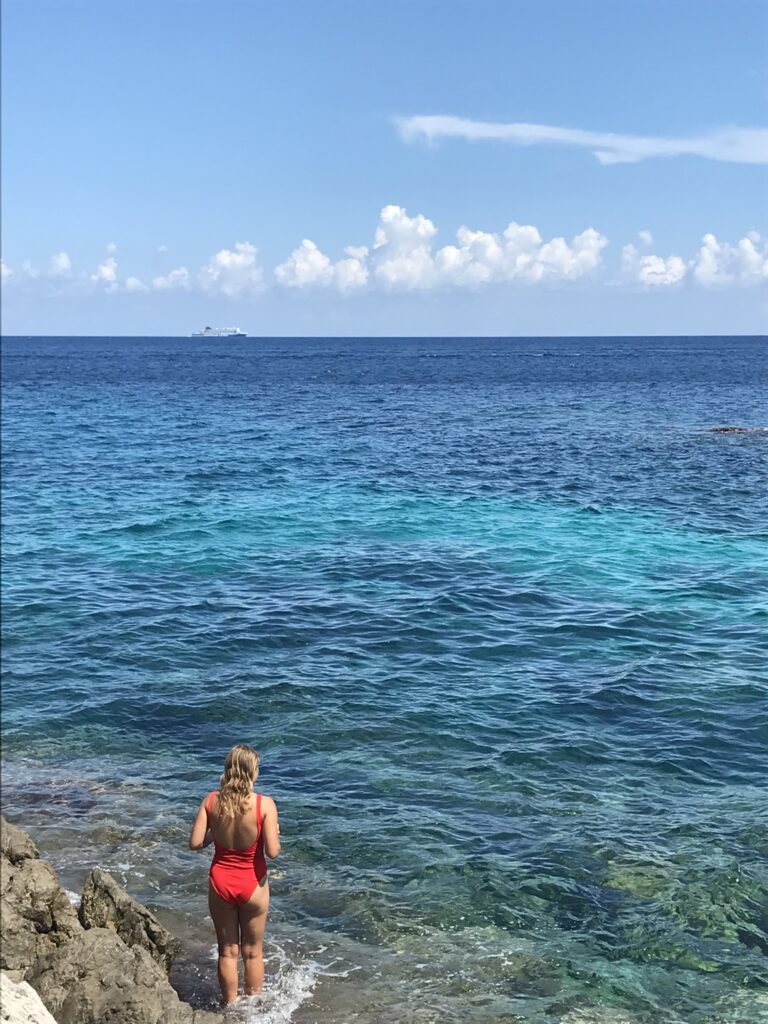
Snorkelling is often where people first fall in love with the ocean, think entry-level ocean access, basically an instant immersion to the underwater world. I remember back to my first experience with snorkelling, when my family and I were on a holiday in Cyprus, back when I was a pre-teen. We hired a boat and went on a snorkel trip at a place called blue lagoon. As soon as I jumped off the boat with my snorkel on I was hooked, I couldn’t believe I could see underwater and breathe and get to spend hours and hours being immersed in a completely new underwater world. I spent the whole day surrounded by fish and exploring new environments, it was utterly perfect. Fast forward a decade or so and I am being paid to take people snorkelling for the first time, and there is something so magical about being able to witness people falling in love with the ocean, the way I did all those years ago.
Whilst there is no certification to jump into the ocean with a mask, snorkel and fins there is still skill involved. Novice ocean goers often underestimate currents and tides, don’t understand the depth of reef fragility and have limited breath control/ comfortability in the water. I recommend going on a guided snorkel tour for your first time, or exploring an aquatic area you are familiar with until you develop your skills further.
Snorkeling is best for wildlife encounters in shallow reefs, suited for travel and casual ocean connection and often offers the cheapest option when getting to know the ocean.
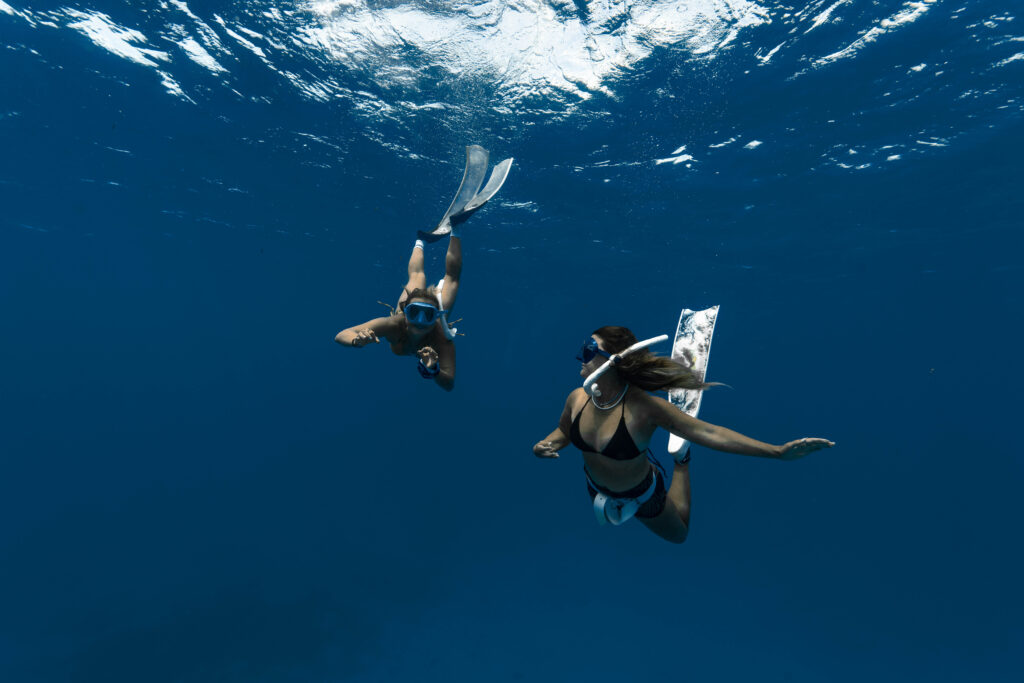
What is scuba diving?
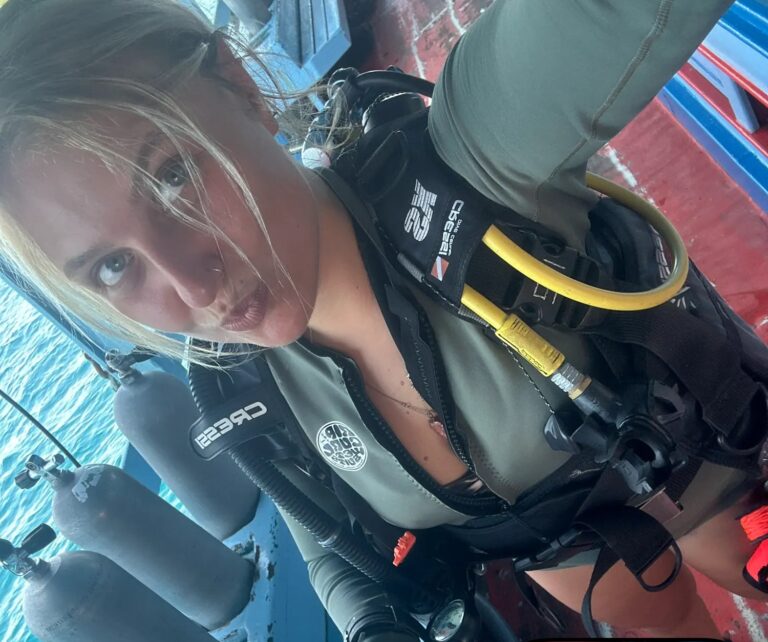
Scuba diving is my area of expertise, from completing my Open Water certification in the UK, to perfecting my PADI Divemaster in Koh Tao, scuba diving is hugely responsible for my love and appreciation of the underwater world. To get the most out of scuba diving certifications are recommended, in order to explore greater depths and gain more experience. That, partnered with expensive and heavy gear, engineered for your survival underwater, often prevents people from taking the plunge.
However, scuba diving is a complete upgrade from your casual holiday snorkel. With silence underwater, and longer observation time, you have the best opportunity to gain ecological understanding and observe species/ ecosystems in all their glory. Training is needed for buoyancy control, to protect the reef and for safety, and to understand nitrogen absorption limits (depth/ time rules). But I think that the training is worth it and only increased my love and appreciation for the ocean. Read our ‘Self- proclaimed Divemaster’ blog post for an in depth account of everything needed to complete your PADI Divemaster.
But scuba also has a dual reality. It funds conservation through tourism and research, but it also contributes to pressure on ecosystems when poorly managed, boat traffic, anchor damage, and inexperienced divers disturbing fragile habitats.
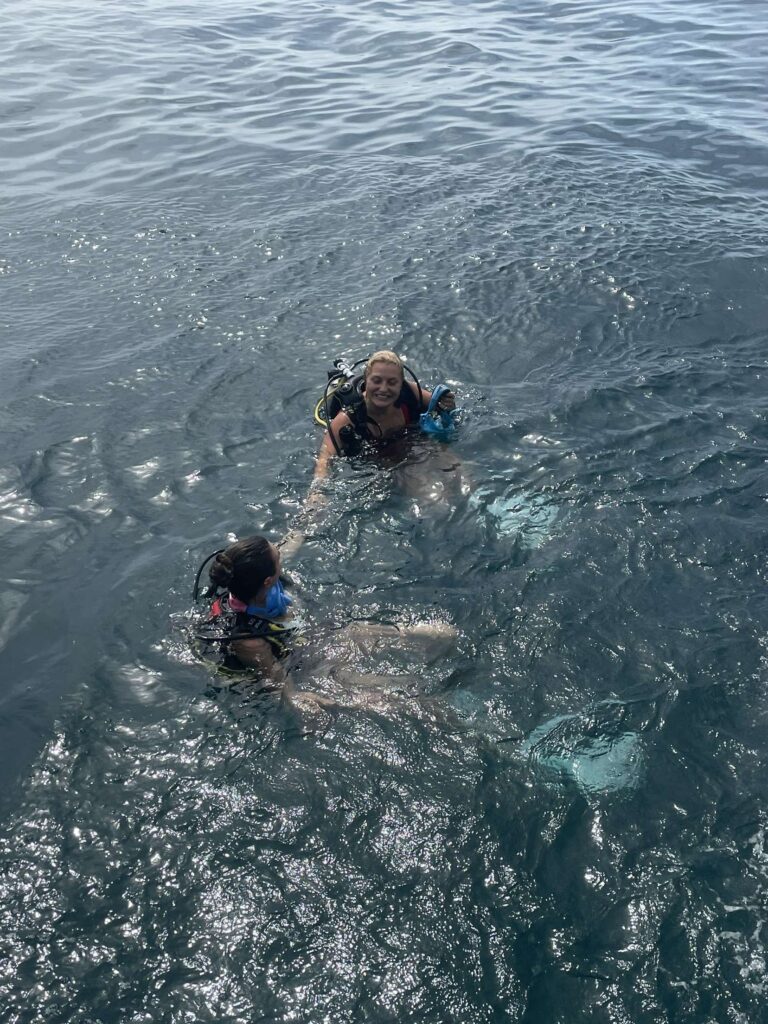
What is free Diving?
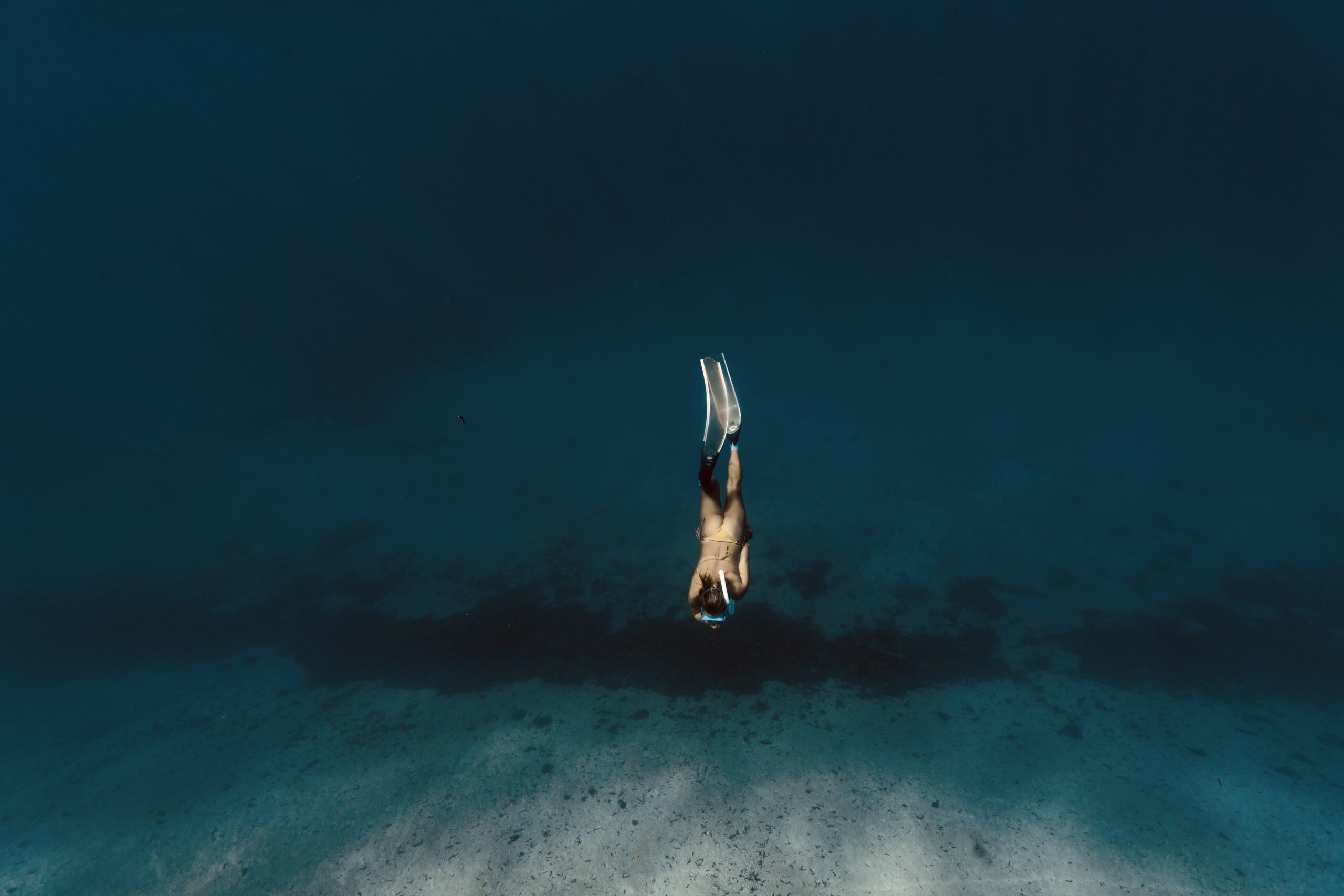
Freediving strips ocean exploration back to its rawest form. No tanks. No bubbles. No heavy equipment. Just you, your breath and the underwater world.
Social media often portrays freediving as effortless; graceful descents, flowing movements and serene underwater shots that make it look almost meditative. And whilst freediving can feel incredibly peaceful, what many people don’t realise is how technical the sport actually is. Freediving is not simply “holding your breath.” It requires discipline, training and a deep understanding of both your body and your mind.
Unlike scuba diving, where your air supply comes with you underwater, freedivers rely entirely on breath-hold techniques and efficiency in the water. Equalisation becomes essential as you descend deeper, allowing pressure in your ears and sinuses to balance safely. Breath training, recovery breathing and buddy safety systems are all critical parts of the sport, especially when pushing depth or time limits.
But perhaps the most fascinating aspect of freediving is psychological. Panic underwater is dangerous, and freediving teaches you to remain calm in environments where your body is biologically programmed to do the opposite. Learning how to slow your heart rate, relax your body and trust your movements underwater creates a completely different relationship with the ocean.
Environmentally, freediving also has a much lighter footprint. Without tanks or excessive equipment, marine life often behaves more naturally around freedivers. There’s less noise, less disruption and a greater sense of moving with the ocean rather than simply visiting it.
For many people, freediving becomes less about depth records and more about connection. There’s something incredibly humbling about descending into the blue on a single breath, completely present in the moment, suspended in silence.
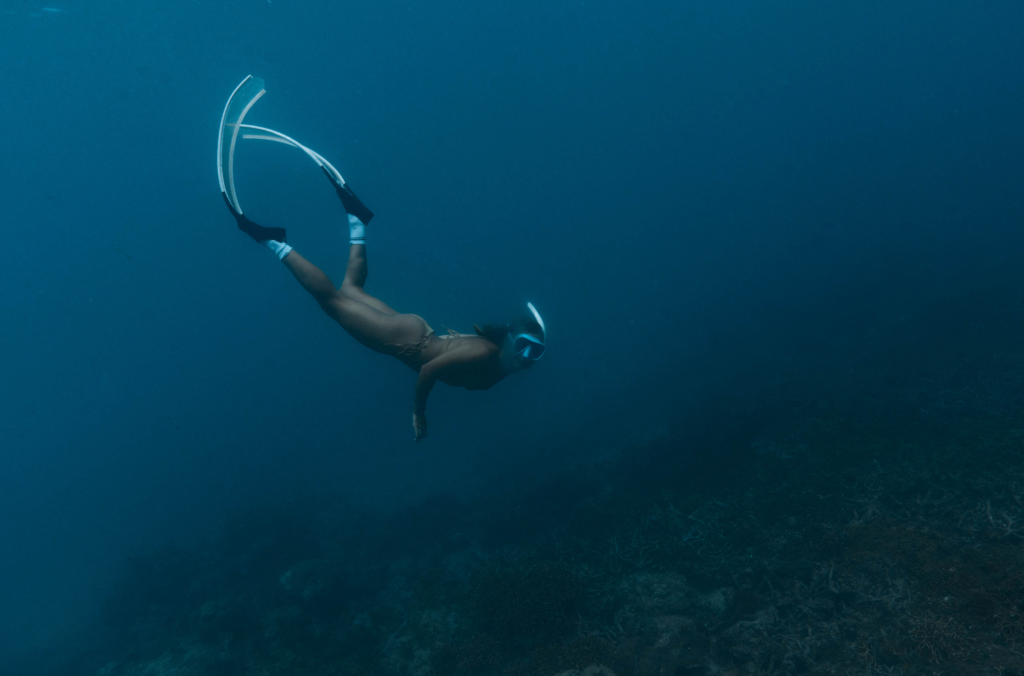
The real cost of ocean access:
It’s easy to assume these activities are just about interest or preference. But cost plays a huge role in who gets access to what.
Snorkelling is the most accessible:
- Mask and fins: relatively low cost
- No training required
- Entry point for most ocean travellers
Scuba diving sits at the other end:
- Certification courses can range from a few hundred pounds
- Full kit is expensive
- Travel often required for good dive sites
Freediving sits somewhere in the middle:
- Courses are structured but shorter
- Gear is minimal, but coaching is often important
- Progress depends heavily on practice and comfort in water
The cost isn’t just financial, it’s time, training, commitment and responsibility. If you’re committed, definitely take the plunge, it may be the best decision of your life, it was definitely one of mine. However do remember it isn’t always smooth sailing and your mask may feel up with more than just seawater during difficult training sessions.
Environmental Imapcts:
When choosing your ideal ocean match it’s important to evaluate their implications.
Firstly, snorkelling has minimal environmental repercussions, such as sunscreen damage to reefs and accidental reef contact. These can be minimised by opting for reef-safe sunscreen and educating yourself about your environment and how to be mindful of your reef surroundings.
Scuba is slightly less green peace than the other two options, with boat traffic, anchor damage and potential dive buoyancy teething issues create more risks to the oceans. But what issues we can cause we can equally contribute to conservation efforts.
Freediving is considered to have the lowest physical impact, however you still have to account for the travel footprint and the way you are exploring these new depths. Avoid kicking coral and please, for the love of god, leave the ocean the way you found it. Put down that ‘pretty shell’ and avoid touching marine life.
The ocean doesn’t judge how you enter it.
But it absolutely responds to how you behave once you’re there.
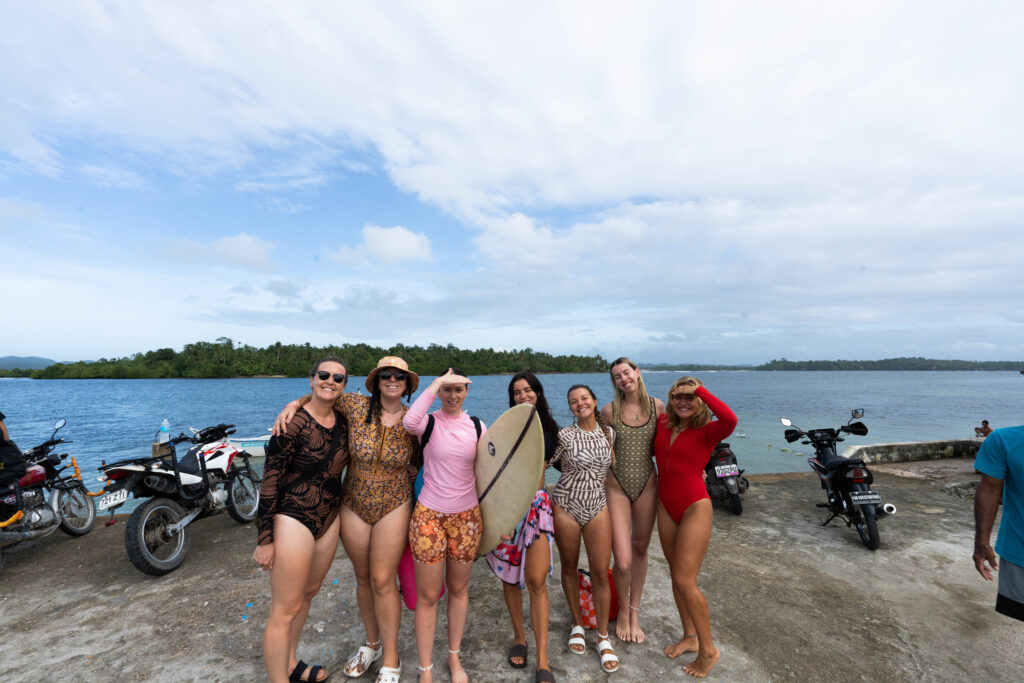
Where to do each one?
Rather than thinking in terms of “best destinations,” it helps to think in terms of environments:
- Tropical reefs → snorkelling and scuba (high biodiversity, high sensitivity)
- Temperate waters → kelp forests, UK coastlines, cooler but equally rich ecosystems
- Deep drop-offs and blue water → freediving environments where depth becomes the focus
- Marine protected areas → where your presence is most aligned with conservation
The “best spot” is often less about location, and more about protection status and behaviour.
Choosing your perfect match:
There isn’t a single right answer and that’s the beauty of exploring new depths and the ocean.
Snorkelling might suit you if:
- you want immediate access to the ocean
- you travel often and want flexibility
- you’re still building confidence in open water
Scuba diving might suit you if:
- you want structure, training, and depth of knowledge
- you’re curious about marine ecosystems at a deeper level
- you want to understand the ocean from the inside
Freediving might suit you if:
- you’re drawn to challenge and control
- you enjoy the mental side of breathwork and calm
- you want minimal interference between you and the ocean
But here’s the real truth:
Most people who spend time in the ocean don’t stay in just one category.
They move between them. They evolve with experience. They come back to different methods depending on what they want to feel or learn.
Final wave of thought:
Ocean access isn’t about depth, certification, or equipment.
It’s about attention.
Snorkelling teaches you to notice the surface. Scuba teaches you to exist inside another world. Freediving teaches you to slow down enough to feel it.
And somewhere between all three is the real question this blog is always trying to answer:
Not just how we experience the ocean, but how we choose to show up in it.
Because the goal isn’t just to see more of the ocean.
It’s to care about it more deeply every time we do.